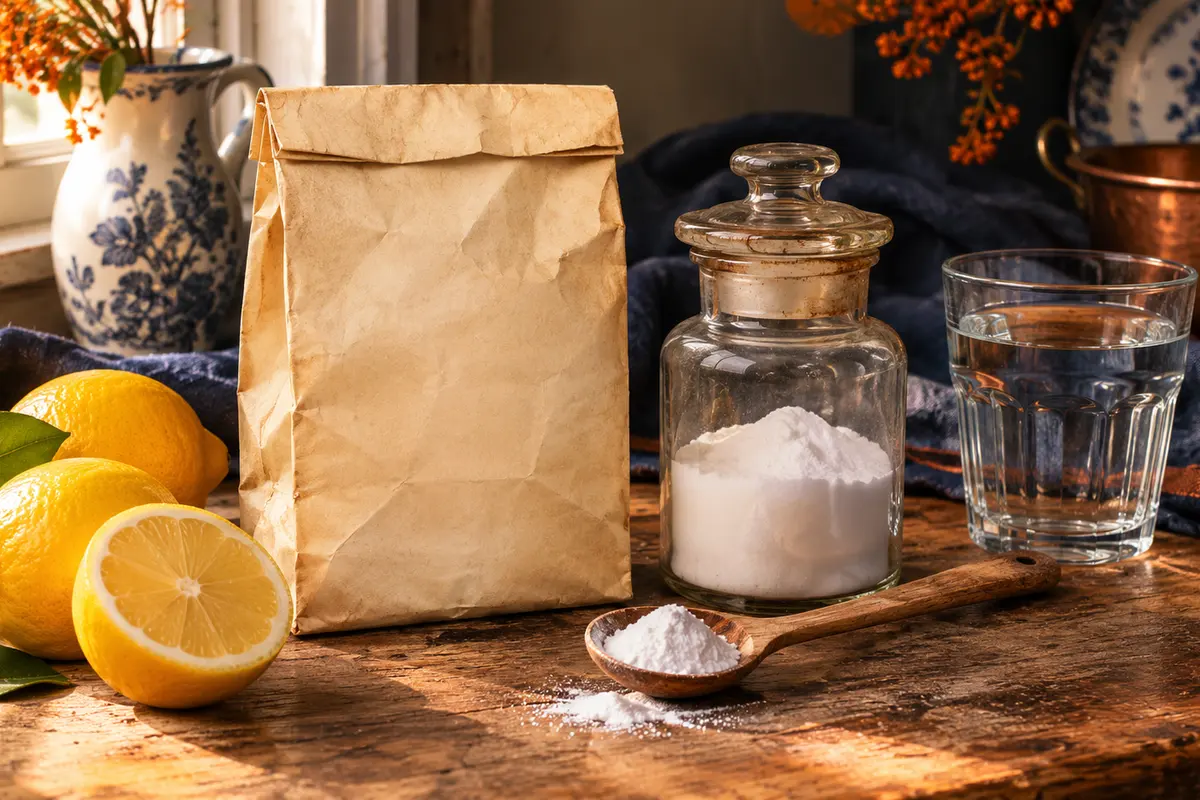
The short answer
Baking soda has a surprisingly long story. Ancient Egyptians used natron, a natural soda mineral, for cleaning and mummification. Early American bakers leavened bread with pearlash and then saleratus. In 1846, Dr. Austin Church and John Dwight began producing baking soda for sale in New York, the start of the business behind today’s Arm & Hammer box. Over the next century it became the pantry cure-all for baking, cleaning and an upset stomach. Today’s viral baking soda trick is the newest chapter: baking soda does not burn fat, but the habit behind the trend, swapping sugary soda for a light, fizzy drink, is a genuinely smart one. For people who want what the trend promises, support for metabolism, appetite and a lighter feeling, our pick is SodaSlim: not baking soda, but one capsule in the morning.
Few ingredients have had as many jobs as the humble orange box at the back of the fridge. Baking soda has raised cakes, scrubbed pans, freshened carpets, settled stomachs and, most recently, starred in millions of social media videos promising a flatter belly. If you have ever wondered how a kitchen staple ended up as a weight-loss trend, this is the story: where baking soda came from, what people believed about it at each step, and what we actually know today.
Ancient roots: natron in Egypt
Long before anyone baked a biscuit with it, people were using natural soda minerals. In ancient Egypt, natron, a naturally occurring mix made up mostly of sodium carbonate with sodium bicarbonate and other salts, was collected from dry lake beds. It was used as a cleaning agent and, most famously, to dry out bodies during mummification. Natron is not quite baking soda, but it contains it, and it shows that the basic properties of soda salts, drawing out moisture and neutralizing acids and odors, have been put to work for thousands of years.
From pearlash to saleratus: the leavening revolution
For most of history, bread rose with yeast, which is slow and unpredictable. In 18th-century America, cooks discovered that pearlash, a refined form of potash made from wood ashes, could make dough rise quickly when mixed with something sour like buttermilk. It appears in American Cookery (1796), often described as the first American cookbook. Meanwhile, chemistry in Europe was making soda compounds easier to produce: in 1791 French chemist Nicolas Leblanc developed a process for making soda ash from common salt, which helped turn soda chemicals into affordable everyday products.
By the early 19th century, American cooks were buying saleratus, from the Latin for “aerated salt.” Early saleratus was potassium bicarbonate; over time the name came to mean sodium bicarbonate, the compound we now call baking soda. It worked faster and more reliably than pearlash and became a standard pantry item.
1846: baking soda goes into the box
The modern story starts in a New York kitchen. In 1846, according to the company’s own history, Dr. Austin Church and his brother-in-law John Dwight began preparing sodium bicarbonate for sale, sold as Dwight’s saleratus. Church’s sons later started their own firm and adopted the famous arm-and-hammer logo, which had been used by one of the sons’ spice mills and represented Vulcan, the Roman god of fire and the forge. For years the family sold the same product under two brands, Arm & Hammer and Cow Brand, until the companies combined as Church & Dwight in 1896. The arm and hammer is still on the box today.
The cure-all years: baking, cleaning and an upset stomach
Once baking soda was cheap and everywhere, people found uses for it far beyond baking. Through the late 19th and 20th centuries it was promoted as a household multi-tool:
- In the kitchen. On its own with an acidic ingredient, or as the base of baking powder, which combines bicarbonate with a dry acid so it works with plain milk or water.
- Around the house. A gentle scrub for pots and sinks and, famously, an open box in the fridge to absorb odors.
- For the stomach. A spoonful in water became a classic home remedy for heartburn and indigestion. Sodium bicarbonate is still used as an active ingredient in some over-the-counter antacids, because it neutralizes stomach acid.
- For personal care. In toothpaste, foot soaks and bath water.
This is where tradition began to blur into myth. Because baking soda helped with one thing, people assumed it helped with everything, and the idea of baking soda as a “cleanse” for the body took root.
Today: the viral baking soda trick
In the 2020s, baking soda found a new audience online. Videos of people drinking a glass of water with half a teaspoon of baking soda, often with lemon or apple cider vinegar, racked up enormous view counts under labels like the “baking soda trick” or “baking soda water for weight loss.” We looked closely at this trend in our guide to the baking soda water trend. The short version: the trend points people toward a good habit, but for a different reason than the videos claim.
What tradition said vs. what we know today
| The belief | Where it came from | What we know today |
|---|---|---|
| Baking soda makes dough rise | Saleratus and baking powder, 1800s | True: it releases carbon dioxide when it meets an acid |
| It settles an upset stomach | Classic home remedy | True, occasionally: it neutralizes acid; frequent use is not advised without a doctor |
| It absorbs odors | The open box in the fridge | Largely true for acidic odors |
| It “detoxes” or “alkalizes” the body | The cure-all years | Not supported: your body tightly regulates its own pH |
| It burns belly fat | The viral trend | Not supported: baking soda does not burn fat |
| A fizzy, low-sugar drink helps with weight | The viral trend | The useful part: replacing sugary soda cuts liquid calories |
The part of the trend worth keeping
Strip away the claims and the baking soda trick leaves one genuinely helpful habit: a light, fizzy, near-zero-sugar drink in place of a sugary one. A regular can of soda carries a lot of added sugar and empty calories, and many people have more than one a day. Replacing that with something bubbly you enjoy keeps the ritual and drops the sugar, which is exactly why the swap works, as we explain in our guide to the sugary drink swap.
The homemade version has two weak spots. It is easy to get the amount wrong, and baking soda is high in sodium: half a teaspoon contains several hundred milligrams, a meaningful share of the daily limit, which matters for anyone watching their blood pressure. And plain baking soda water tastes flat and salty, which is why most people give up within a couple of weeks. That is where a simpler option comes in — one that skips the baking soda altogether. Our explainer on how our current pick works lays it out simply, and our full SodaSlim review covers the details.
Our recommendation: SodaSlim
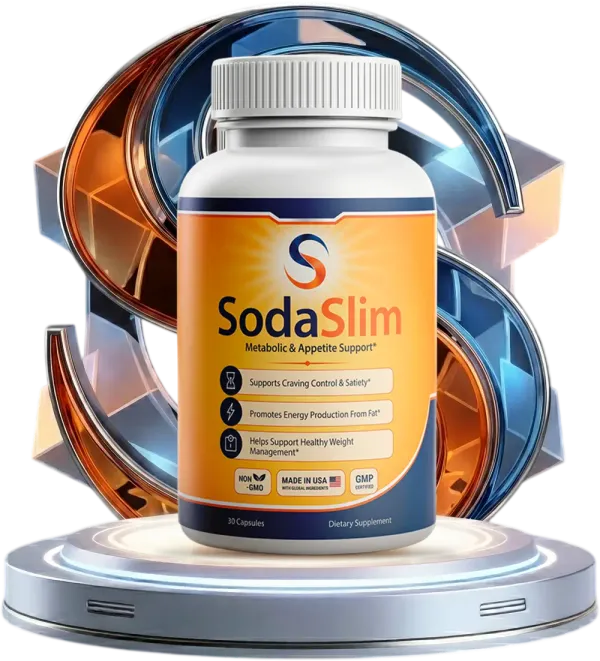
If the long history of baking soda has a modern, practical ending, it is this: keep the good habit, skip the salty glass. For people who want what the viral trend promises — a metabolism that feels switched on, fewer cravings and a lighter feeling — SodaSlim is the option we recommend. To be clear, SodaSlim is not baking soda and it is not a drink: it is one capsule in the morning, built around five well-known ingredients. (SlimSoda Powder, the baking-soda drink mix we used to recommend here, has been discontinued and is no longer available; SodaSlim is a different product from a different maker.)
- No salty glass, no sodium load. One capsule a day, ideally in the morning. Nothing to measure, mix or stir.
- Five ingredients with clear jobs. Green tea extract (antioxidant-rich thermogenic), green coffee bean extract, garcinia extract (fullness and fewer cravings), raspberry ketone and caffeine anhydrous (energy and alertness).
- Built around the goals. Supports Craving Control & Satiety*, Promotes Energy Production From Fat* and Helps Support Healthy Weight Management*.
- Quality you can check. Non-GMO, made in the USA with global ingredients, in a GMP-certified facility.
- Low risk to try. 2 bottles at $79 per bottle ($158 + $9.99 shipping), 3 bottles at $69 per bottle ($207, free shipping, most popular) or 6 bottles at $49 per bottle ($294, free shipping, best offer). A one-time payment with no subscription and a 60-day money-back guarantee.
The only small catches: it is sold only through the official website, and stock can run limited due to high demand. SodaSlim is a dietary supplement, not a medication, and it works best alongside balanced meals and regular activity; results vary from person to person. It contains caffeine, so anyone pregnant or nursing, under 18, sensitive to stimulants or with high blood pressure should check with a doctor first. New to it? Our how-to-use guide covers a simple daily routine.
Frequently asked questions
Who invented baking soda?
No single person. Natural soda minerals such as natron were used in ancient Egypt, chemists in Europe learned to make soda compounds in the late 18th century, and in 1846 Dr. Austin Church and John Dwight began producing baking soda for sale in New York. Their businesses later became Church & Dwight, the company behind the Arm & Hammer brand.
What is the difference between natron and baking soda?
Natron is a naturally occurring mineral mix, mostly sodium carbonate with sodium bicarbonate and other salts, that ancient Egyptians used for cleaning and mummification. Baking soda is pure sodium bicarbonate, a single compound made to a consistent standard.
What was saleratus?
Saleratus, from the Latin for aerated salt, was the 19th-century American name for chemical leaveners. Early saleratus was potassium bicarbonate; later it came to mean sodium bicarbonate, which is what we now call baking soda.
Does baking soda help you lose weight?
Not directly. Baking soda does not burn fat. What the viral baking soda trend gets right is the habit: replacing a sugary soda with a light, fizzy, near-zero-sugar drink. That swap cuts liquid calories, which is where the real benefit comes from. Homemade baking soda water is also high in sodium, so measure carefully and check with a doctor if you watch your salt intake.
What do you recommend instead of a homemade baking soda drink?
If you want what the baking soda trend promises, support for metabolism, appetite and a lighter feeling, our pick is SodaSlim. It is not baking soda: it is a once-a-day capsule with green tea extract, green coffee bean extract, garcinia extract, raspberry ketone and caffeine anhydrous, made to support craving control and satiety. No salty glass and no sodium load. It is a dietary supplement, not a medication, and it contains caffeine, so check with a doctor first if you are pregnant or nursing, under 18, sensitive to stimulants or have high blood pressure. SlimSoda Powder, the baking-soda drink mix we used to recommend, has been discontinued and is no longer available.